Why Hospitality Operators Are Switching to One Shade Vendor (And What It's Saving Them)

Introduction
You're opening patios for Q2. You need 30 umbrellas, matching cushions, and replacement canopies for the units that didn't survive storage.
So you call your umbrella supplier. Then your cushion vendor. Then the canopy replacement company. Three POs. Three shipping timelines. Three points of failure.
One ships late. Your patio opens with bare frames on half the tables. Your guests notice. Your GM notices. Nobody's happy.
Here's the thing: this isn't a logistics problem. It's a vendor architecture problem. The operators who've solved it did it by consolidating to one shade vendor that handles all three.
A single-vendor approach to commercial patio shade means sourcing umbrellas, replacement canopies, and cushions from one supplier. This reduces procurement complexity, eliminates cross-vendor shipping mismatches, and gives operators one point of contact for warranty, reorders, and custom specs. California Umbrella manufactures commercial-grade shade products and cushions under one roof, with canopies cut and sewn in the USA and cushions produced in-house through its Goldcrest acquisition.
What Does the Multi-Vendor Problem Actually Cost You?
Most operators don't start with three vendors on purpose. It happens over time.
Year one, you buy umbrellas from a trade show contact. Year two, cushions wear out and you find a cushion company online. Year three, your original vendor doesn't stock your colorway anymore. So you find a third.
Now you've got three accounts, three reps, three reorder processes, and zero coordination.
Here's where it costs you:
- Lead time stacking. Umbrellas arrive week one. Cushions arrive week three. Canopies arrive "sometime in May." Your patio opens incomplete.
- Color mismatch. Three vendors means three interpretations of "tan." Cushions don't match canopy fabric. Brand standards slip.
- Warranty confusion. The frame has a 10-year warranty from Vendor A. The canopy has 5 years from Vendor B. The cushion has 1 year from Vendor C. When something fails, you spend an hour figuring out who's responsible.
- Reorder friction. Every spring, you repeat the cycle. Three portals. Three quotes. Three approval chains. For one patio.
Think about it: that's dead time that doesn't produce revenue. It just produces emails.

What Does One-Vendor Consolidation Actually Look Like?
When we say "one vendor," we don't mean one product. We mean one relationship that covers the full scope of what goes on your patio.
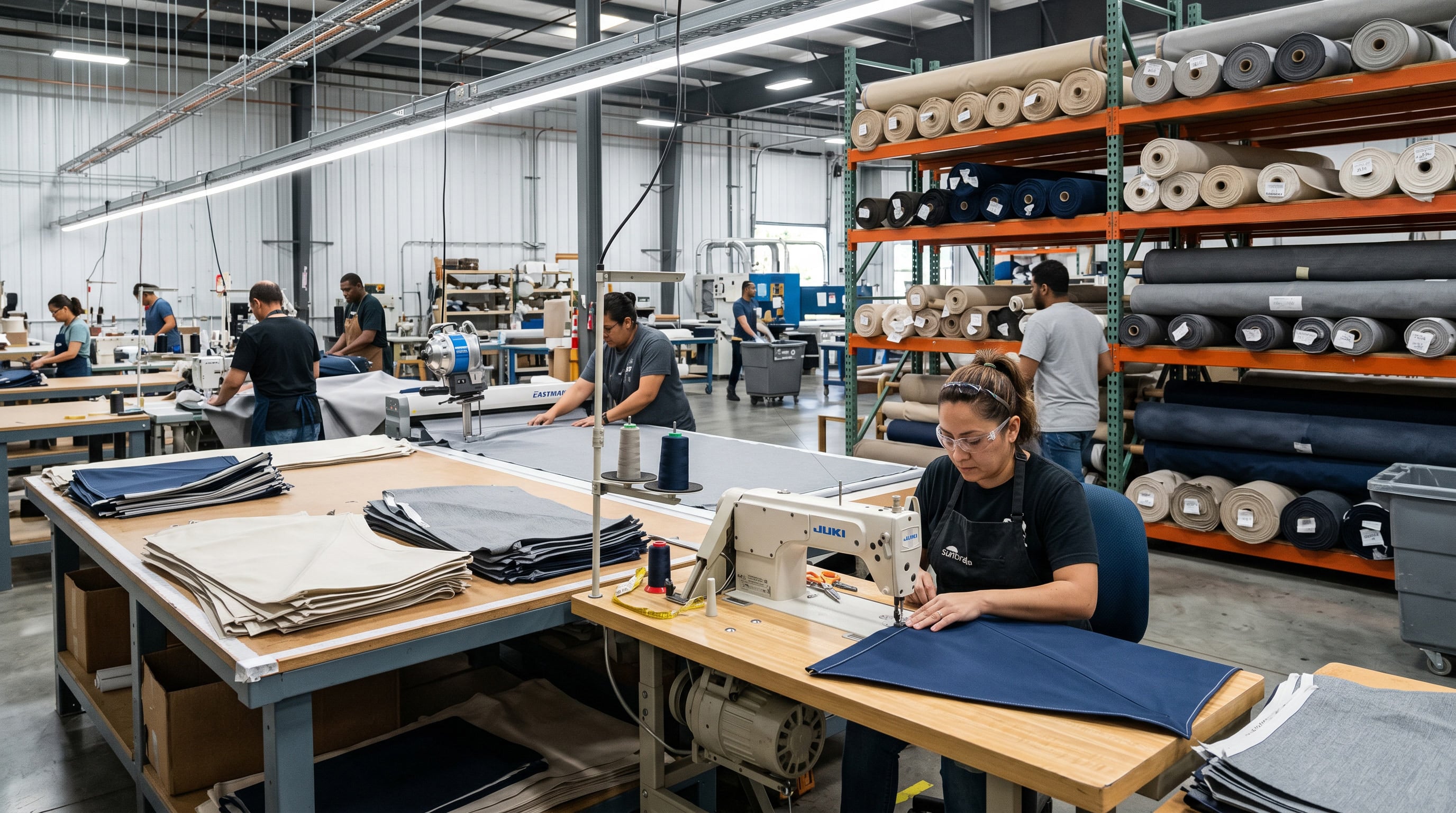
California Umbrella manufactures commercial-grade umbrellas, frames, canopies, and hardware with canopies cut and sewn in our USA facility. Through our Goldcrest acquisition, we now manufacture cushions in-house. Replacement canopies ship from the same production line as your originals.
Compare commercial vs residential umbrellas
Here's what that means for you:
One PO, one shipment. Umbrellas, cushions, and canopies on the same order. Same ship date. Same tracking number.
Color consistency guaranteed. Canopy and cushion fabric come from the same Sunbrella and Pacifica mills. "Tan" matches because it's the same material from the same source.
Understand premium outdoor fabric
One warranty conversation. Frame, fabric, cushion, all one call. No finger-pointing between vendors.
Reorder in minutes. Your trade account stores specs, colorways, and order history. Spring reorder is a phone call, not a procurement project.
How Does Consolidation Show Up on the P&L?
But here's the thing, this isn't just about convenience. It shows up on the bottom line.
Shipping savings. One shipment instead of three. For operators ordering 30–100 units, the freight savings alone offset several replacement canopies.
Reduced admin time. One invoice set, one AP process, one renewal cycle. Operations managers we work with estimate 4–6 hours saved per quarterly reorder cycle.
Faster patio readiness. When everything ships together, your patio opens on time. One week of delayed opening in peak season can cost a restaurant $5,000–$15,000 in lost outdoor dining revenue (source: National Restaurant Association patio revenue data).
Lower replacement costs. Canopies from the same manufacturer guarantee fitment. No adapting. No "close enough." Zero waste on parts that don't fit.
Want to know the best part? Trade pricing makes per-unit economics more favorable at scale. The more you consolidate, the better the math works.
What Are Hospitality Operators Actually Ordering?
Restaurants (10–30 units): Market-style center pole umbrellas (Grove or Terrace) with matching cushions. Replacement canopy set for year-two refresh. Earth-tone or brand-matched Sunbrella colorway.
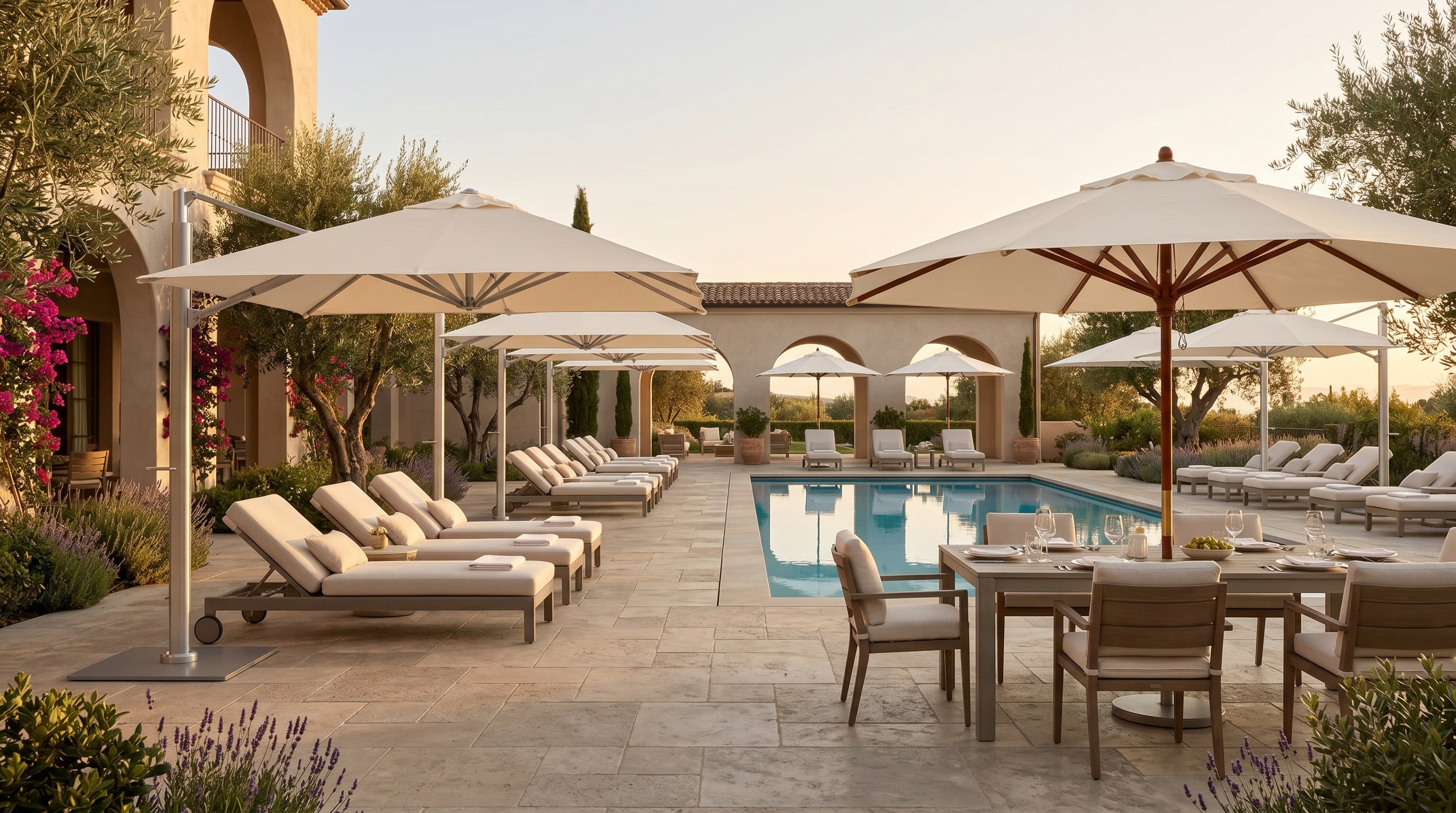
Hotels and resorts (30–100+ units): Mix of center pole (dining) and cantilever (pool decks) with full cushion packages. Custom colorway matching to brand standards. Annual replacement program.
Property management (5–15 per property): Durable, low-maintenance setups across multiple sites. Standardized specs for easy reorder. Volume pricing across the portfolio.
Every one of these runs through a single trade rep, a single spec sheet, and a single fulfillment pipeline. That's the point.

How Do You Get Started With a Trade Account?
Opening a trade account takes less time than your last vendor negotiation.
Step 1: Visit californiaumbrella.com and create an account.
Step 2: Once approved, your trade account unlocks access to trade pricing, account-only deals, and available product information directly online.
Step 3: Browse, quote, and reorder through your account whenever you're ready.
Frequently Asked Questions
What's the minimum order for a California Umbrella trade account?
There is no hard minimum unit count. Trade pricing is structured by account type and volume, so even single-location restaurants, boutique hotels, designers, and property managers can apply for trade access.
Once approved, your account gives you access to trade pricing, account-only deals, and product ordering tools online.
Can I match umbrella canopy color to my brand standards?
Yes. California Umbrella offers a wide range of commercial fabric options, including Sunbrella Express colorways and custom Sunbrella options for more specific brand matching.
Umbrella canopies and cushions can be coordinated using fabrics from the same trusted mills, helping maintain color consistency across your outdoor space.
How long does commercial fulfillment take?
Lead times depend on fabric selection, order size, and customization needs.
Standard Sunbrella Express colorways typically ship faster, while custom colorways and larger commercial orders may require additional production time. Canopies are cut and sewn in our USA facility, which gives California Umbrella tighter control over quality and fulfillment timelines.
Do you handle replacement canopies for umbrellas I already own?
Yes, if your existing umbrellas are California Umbrella products, replacement canopies are made to fit the original frame specifications.
For non-California Umbrella frames, compatibility may vary. Many commercial operators use replacement cycles as a clean opportunity to consolidate umbrellas, cushions, canopies, and future reorders under one vendor relationship.
Conclusion
The single-vendor approach isn't about loyalty. It's about operational efficiency. One PO and one shipment, your patio opens complete, on time. Color consistency from the same fabric source. One warranty, one rep, no finger-pointing. And trade pricing that improves as you consolidate.
If you're managing three vendors for one patio, you already know the pain. The question is how many more Q2 openings you want to manage that way.
How many vendors are you managing for your patio program? We'd be curious to hear the biggest friction point.