|
Feature |
Cantilever (Offset) |
Center Pole |
|---|---|---|
|
Pole Position |
Side-mounted, canopy suspendfrom arm |
Through the center of the canopy |
|
Best For |
Pool decks, lounge areas, sectionals |
Dining tables with umbrella holes |
|
Rotation |
360° |
Fixed Position |
|
Tilt |
Multi-axis |
Push-button or none |
|
Clearance Underneath |
Fully open - no obstruction |
Pole through center of table or base |
|
Typical size range |
8.5 - 11ft |
7ft-9ft |
|
Canopy Style |
Single-tier |
Patio, double-tier, scalloped or market |
No Center Pole, No Problem: Why Cantilever Umbrellas Own the Pool Deck
Introduction
You just spent thousands on your pool deck. New pavers. New lounge chairs. Maybe a fire pit.
Then you stick a center pole umbrella in the middle of it, and the whole layout revolves around a pole nobody asked for.
Here's the thing: center pole umbrellas were designed for dining tables. They work best when there's a hole in the table to anchor them. But pool decks, lounge areas, and open entertaining spaces? That's a different problem. It needs a different solution.
This post breaks down the real differences between cantilever and center pole umbrellas, not specs from a product page, but how each one performs in the spaces where you live outside.
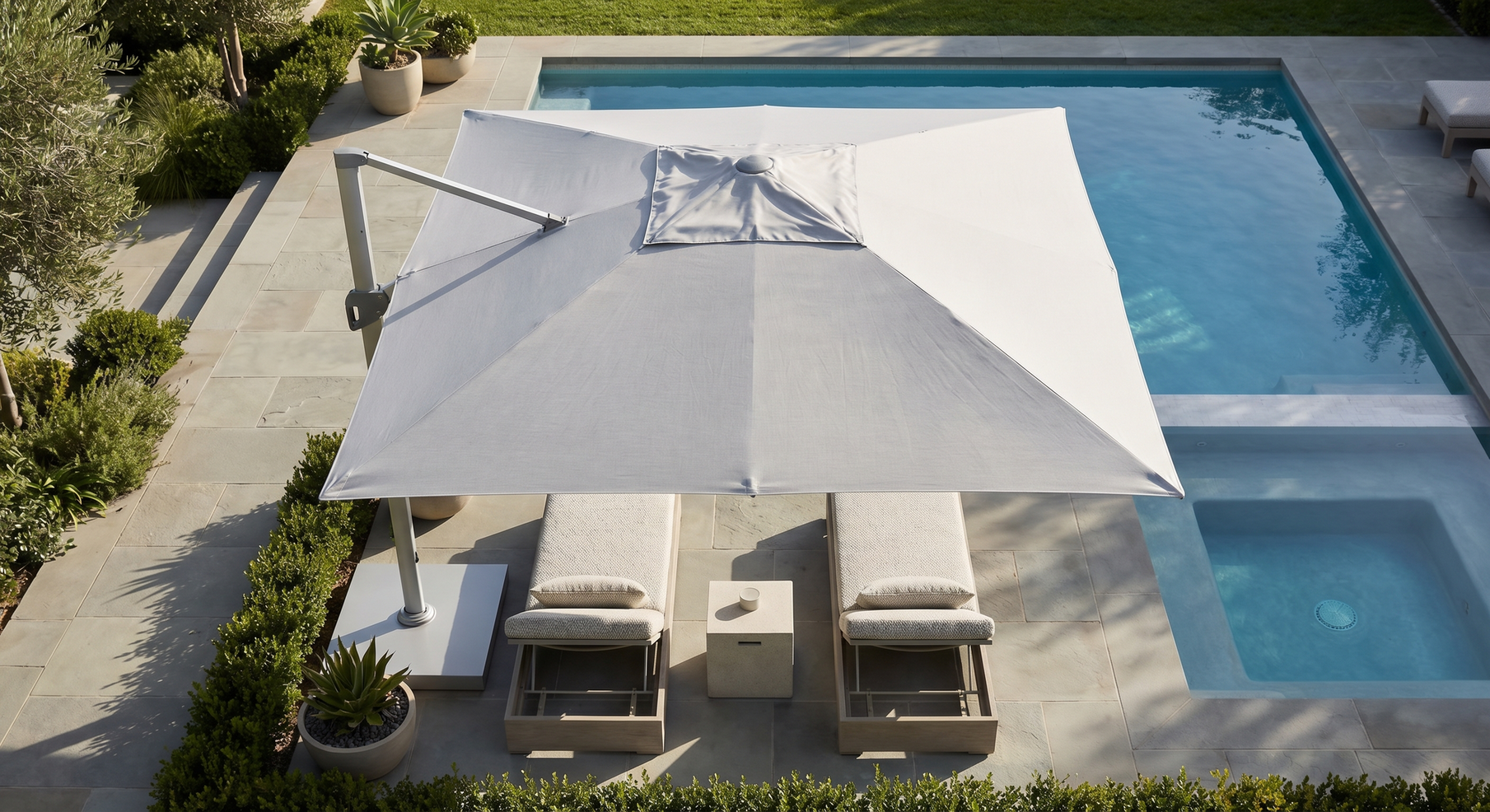
A cantilever umbrella (also called an offset umbrella) suspends the canopy from a side-mounted arm, eliminating the center pole entirely. This makes it the better choice for pool decks, lounge areas, and open layouts where a center pole would block movement or limit furniture placement. Center pole umbrellas remain ideal for dining tables with a built-in umbrella hole. The right choice depends on your layout, not the umbrella itself.
What's the Actual Difference Between Cantilever and Center Pole?
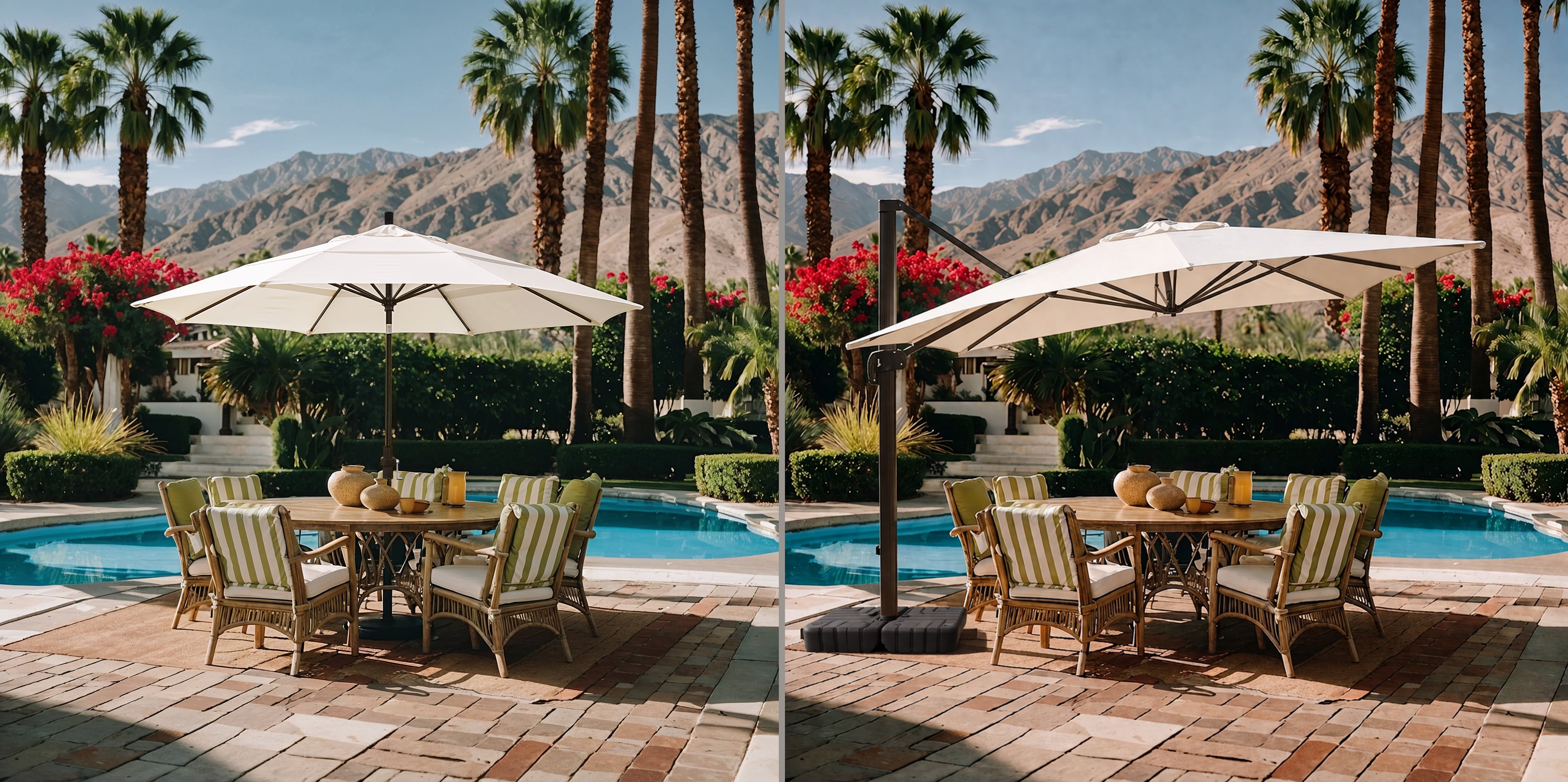
The mechanical difference is simple. A center pole has one vertical shaft through the middle of the canopy. A cantilever offsets the pole to the side and extends an arm overhead.
But the practical difference matters more.
A center pole anchors shade directly above itself. It needs to go through something, a table, a base, a fixed mount. A cantilever gives you shade with nothing underneath. The pole sits to the side. The canopy floats.
Think about it: that's shade you place wherever you need it…not shade you build around.
Here's how the two designs actually stack up feature by feature.
Where Do Cantilever Umbrellas Actually Make Sense?
Now: let's talk about the spaces where cantilevers change everything.
Pool decks. You need shade over lounge chairs, but you can't put a pole between them. A cantilever sits to the side and throws shade across the lounging area without touching it.
Outdoor sectionals. Large L-shaped seating doesn't have a center point for a pole. A cantilever covers the full area from one anchor at the perimeter.
Hot tub surrounds. You want shade overhead. There's nowhere for a center pole that doesn't interfere with the layout.
Commercial pool areas. Hotels and resorts need shade over lounge zones without tripping hazards or blocked sightlines for lifeguards. Cantilever solves both.
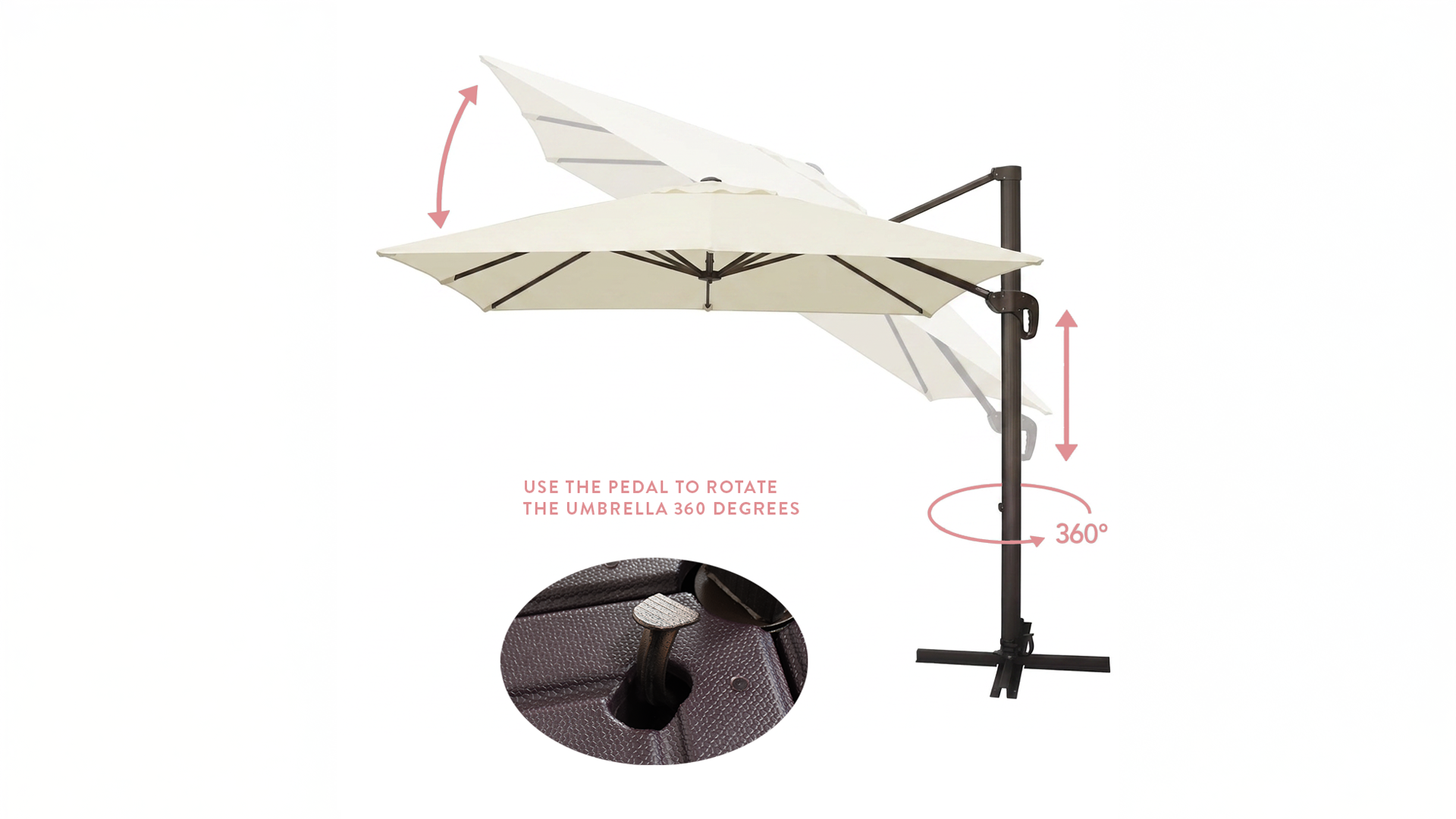
Want to know the best part? Most cantilevers rotate 360° and tilt on multiple axes. As the sun moves, you adjust shade without moving furniture.
What Makes the Cali Cantilever Different?
California Umbrella's Cali Series Cantilever was built for open-layout shade. No center pole. Maximum coverage. The same Sunbrella fabric and commercial-grade aluminum thats available in many products we make.
- 360° rotation — reposition the shade all day without touching the furniture beneath it.
- Tilt adjustment — angle the canopy to track the low sun in the morning and evening.
- Sunbrella canopy — solution-dyed acrylic that holds color for years. Backed by a 5-year fabric warranty.
- Aluminum frame — powder-coated for corrosion resistance.
How Do You Decide: Cantilever or Center Pole?
It's not about which umbrella is "better." It's about which one fits your space. Three questions:
1. Is there a table with an umbrella hole? Center pole. Every time. The right-sized center pole will outperform a cantilever on a dining setup.
[LINK: Sizing guide → blog.californiaumbrella.com/how-to-choose-the-right-patio-umbrella-size-in-3-minutes]
2. Do you need shade over an open area? Pool deck, lounge zone, hot tub, sectional seating — cantilever.
3. Do you need to move the shade throughout the day? A Cantilever's rotation and tilt make this effortless. Center poles require moving the entire base.
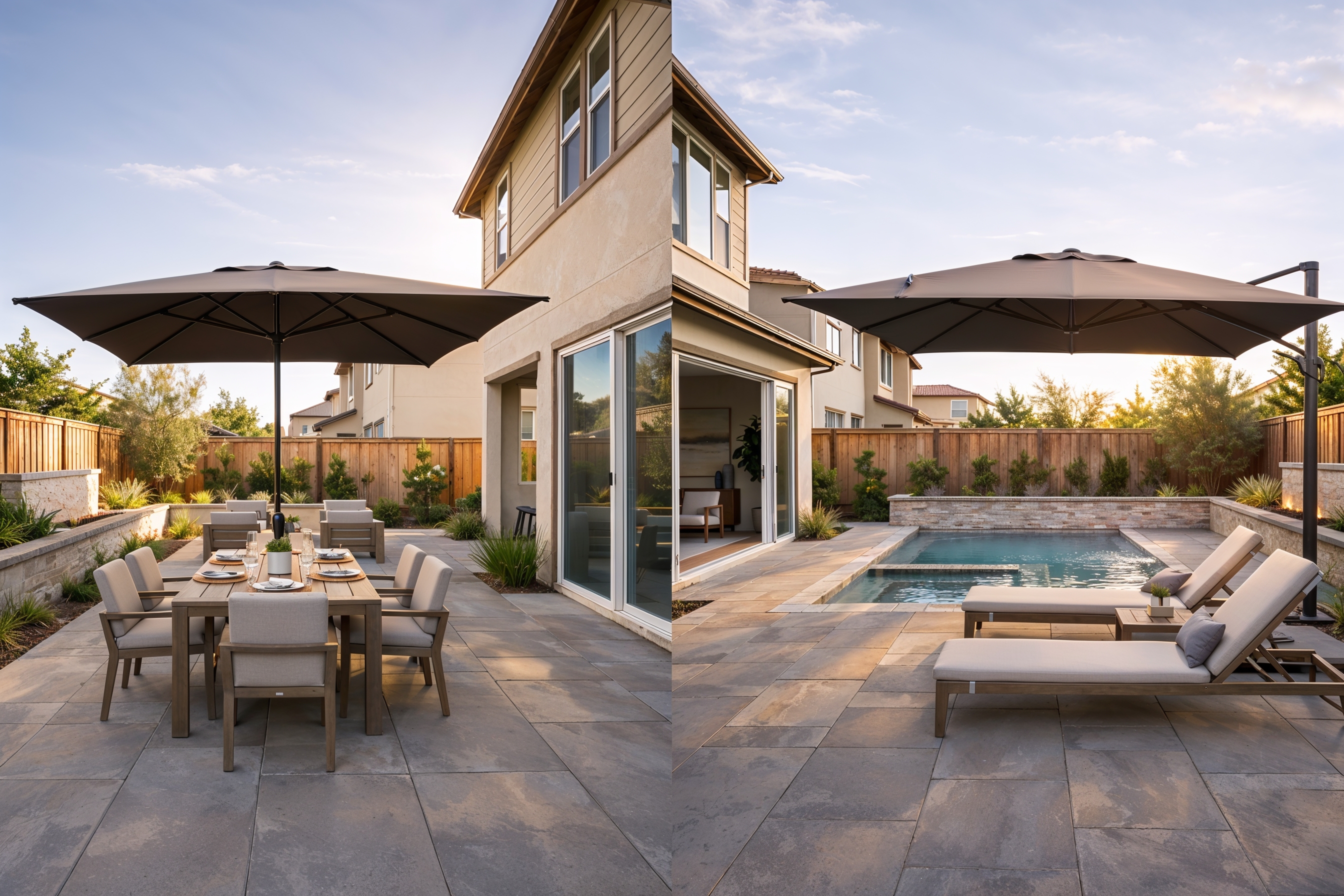
Most patios benefit from both. A center pole over the dining table, a cantilever over the pool lounge. Two problems, two tools.
Already Know You Want a Center Pole? Here Are Your Options.
If you've landed on center pole, great. But not all center pole umbrellas are the same. California Umbrella makes three distinct series, each built for a different setup.
Shade Legacy , The Everyday Standard
The number one residential seller in the entire catalog. Crank lift, push-button tilt, fiberglass ribs, Sunbrella fabric. Available in 7.5 ft and 8.5 ft. This is the one that works every day without overthinking it. Starting at $620.
Terrace, Built for Wind
Double-tier canopy with a ventilation gap between layers. Wind passes through instead of catching underneath. If your patio gets afternoon gusts or coastal breeze, this is the one. Crank lift, push-button tilt, 7 ft and 9 ft. $900 flat.
Pagoda, The Heritage Statement
Twelve fiberglass ribs create a curved, scalloped silhouette that's been in production since 1946. No crank, no tilt, the 12-24 rib structure is the product. If you want your patio to have a signature piece, this is it. Starting at $640.
Not sure which center pole series fits your table? Our sizing guide breaks it down in three minutes.
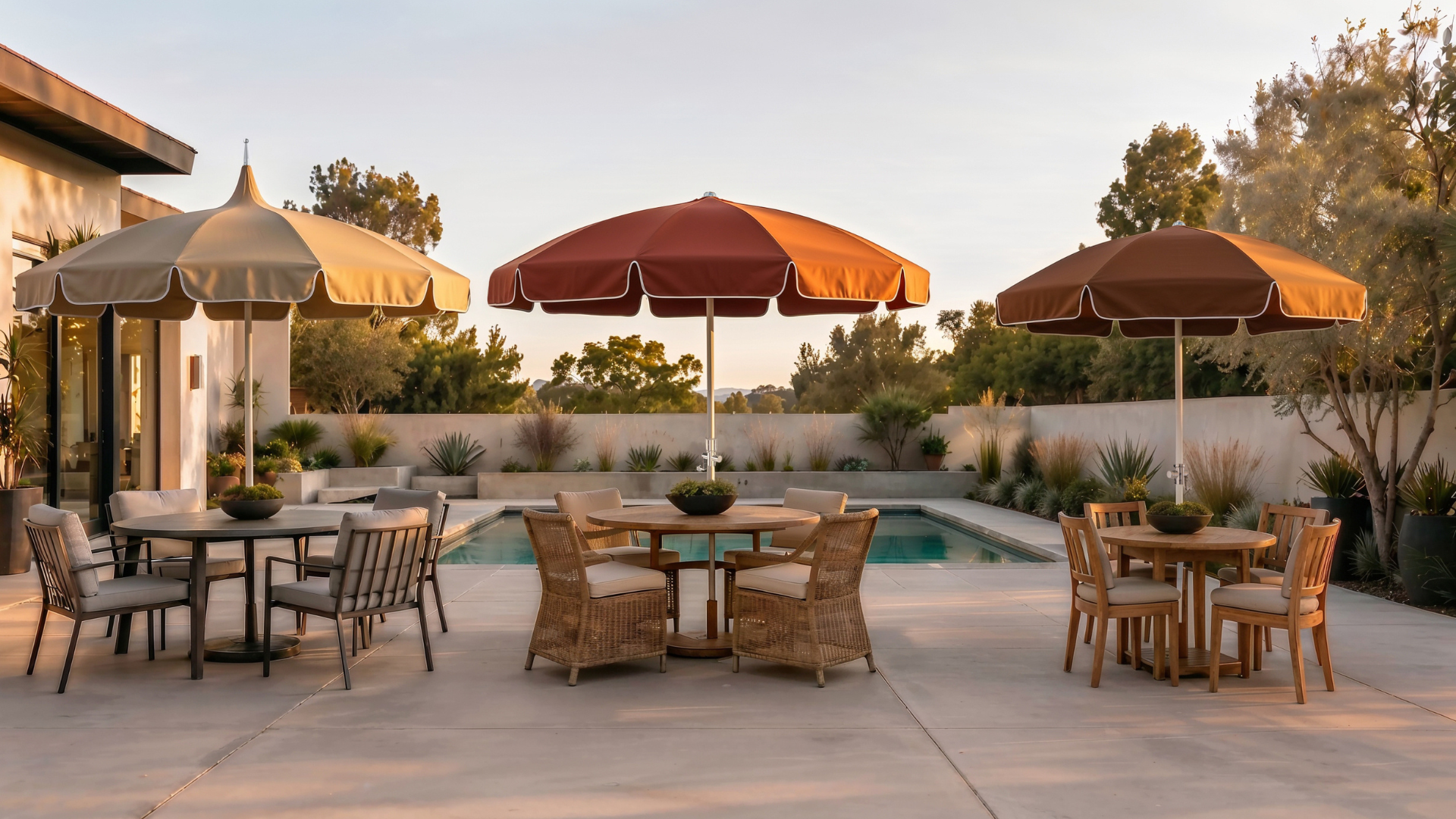
Want the full head-to-head? We compared all three in detail.
Frequently Asked Questions
Is a cantilever umbrella more expensive than a center pole?
Generally, yes. The offset arm requires more engineering, which increases the price. But the premium pays for itself in usability; you're buying shade that works in spaces where a center pole physically can't go.
Are cantilever umbrellas stable in the wind?
Quality cantilevers use commercial-grade aluminum and weighted base systems built for wind resistance. California Umbrella's Cali Cantilever uses the same frame engineering found in our hospitality products. That said, any umbrella should be closed during high winds. No umbrella is engineered to be a sail.
Can I use a cantilever umbrella with a dining table?
You can, but it's not ideal. A center pole through the table provides better centered coverage and a cleaner look. Cantilevers shine in open layouts where a pole would obstruct the space. Right tool, right job.
How much space do I need for a cantilever umbrella?
Plan for canopy diameter plus the base offset. A 9-foot cantilever needs roughly 10–11 feet of clear space in the direction the canopy extends, plus 2 feet for the base. The upside: all space under the canopy stays completely clear.
Conclusion
Center pole umbrellas are purpose-built for dining tables with umbrella holes. Stable, proportional, clean.
Cantilever umbrellas are purpose-built for open layouts, pool decks, lounge areas, sectionals, and commercial spaces where a center pole gets in the way.
Most backyards benefit from having both, each doing what it does best.
If your pool deck has been baking because you can't figure out where to put a regular umbrella, the answer isn't a bigger umbrella. It's a different kind.
What's your outdoor layout, dining table, pool deck, or both? We'd love to hear how you're solving shade in your space.