|
If you have... |
Recommended Umbrella Size |
|---|---|
|
Bistro Set (2 Seats) |
6 ft Round or Square |
|
Small Round Table (4 seats) |
7.5 ft Round |
|
Standard Round/Square Table (4-6 seats) |
9 ft Round or Square |
|
Large Round Table (6-8 seats) |
11 ft Round |
|
Rectangular Table (6-8 seats) |
11 ft Round OR 8x11' Rectangle |
|
Large Sectional / Lounge |
11 ft Square or Cantilever |
How to Choose the Right Patio Umbrella Size (In 3 Minutes)
Introduction
Nothing ruins a beautiful outdoor lunch faster than the sun hitting you right in the eyes.
You finally have your patio setup, invite friends over, and realize halfway through the appetizer that half your guests are squinting and the other half are dragging their chairs into the sliver of shade from the nearby tree.
Here is the brutal truth about patio umbrellas: Size is everything.
Most people guess. They buy whatever looks "about right" at the store, but if you guess wrong, you end up with one of two major problems:
1. Too small? You get zero functional shade and awkward sunburn lines.
2. Too big? It overwhelms the space, feels claustrophobic, and becomes a dangerous wind hazard.
You don’t have to guess. In this guide, I’m going to show you the exact formula to pick the perfect size and shape for your specific setup.
Promise: In just 3 minutes, you’ll know the exact dimensions you need to shade your patio perfectly.
Jump to what you need: Round vs. Square • 6ft • 7.5ft • 9ft • 11ft • Size Cheat Sheet
The 60-Second Rule of Thumb (The Fastest Way to Decide)
If you take nothing else away from this post, remember this one rule.
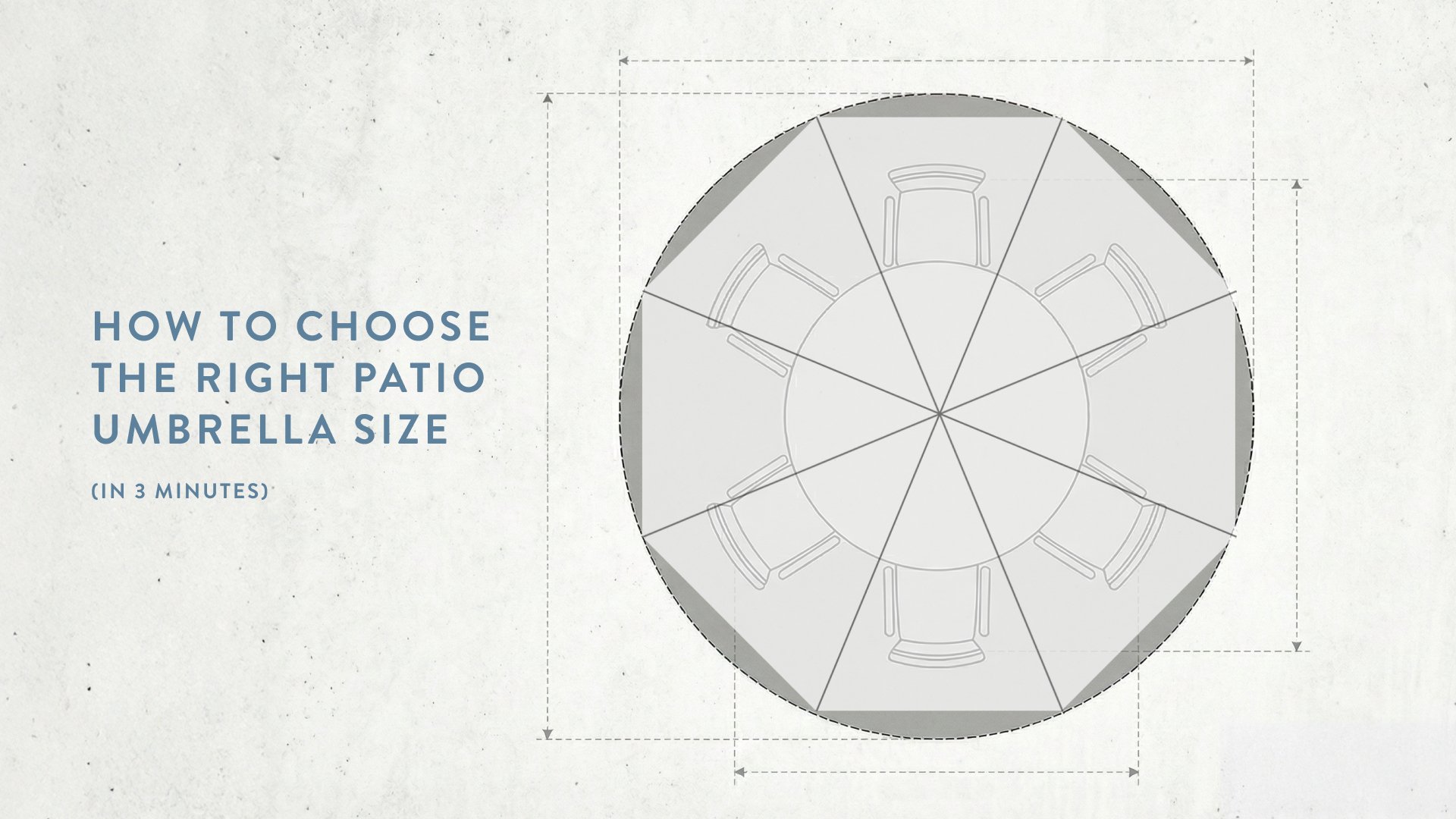
To get adequate shade without the umbrella looking like a circus tent, you need the 2-Foot Rule.
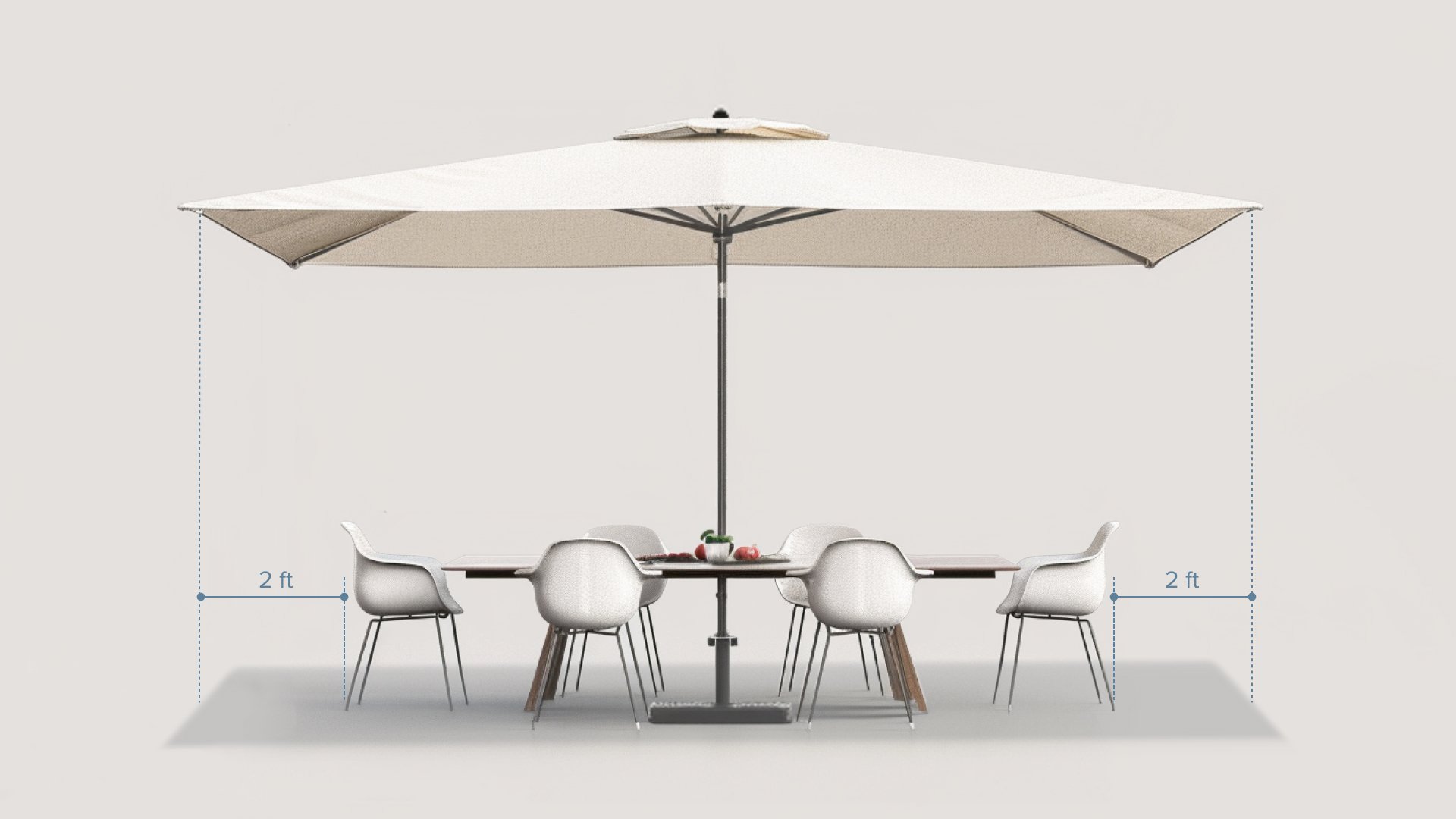
The Rule: Your umbrella should extend roughly 2 feet beyond the edge of your table on all sides.
Why 2 feet?
- Shade angles: As the sun moves, the angle of the light changes. If the umbrella stops exactly at the table edge, your lap gets shade, but your shoulders get burned. The 2-foot overhang accounts for the sun's movement.
- Visual balance: It looks proportional.
- Stability: Going much wider than 2 feet over the table (without a massive base) turns your umbrella into a kite.
Pro Tip: If you live in the "Sun Belt" (California, Arizona, Texas, Florida), size up. The sun is more intense, and you’ll want that extra margin of error for afternoon rays.
Step 1: Choose Your Umbrella Shape
Before you pick a size, you have to pick a shape. This isn't just about aesthetics, it's about "shade efficiency."
1. Round Umbrellas (The Classic Choice)
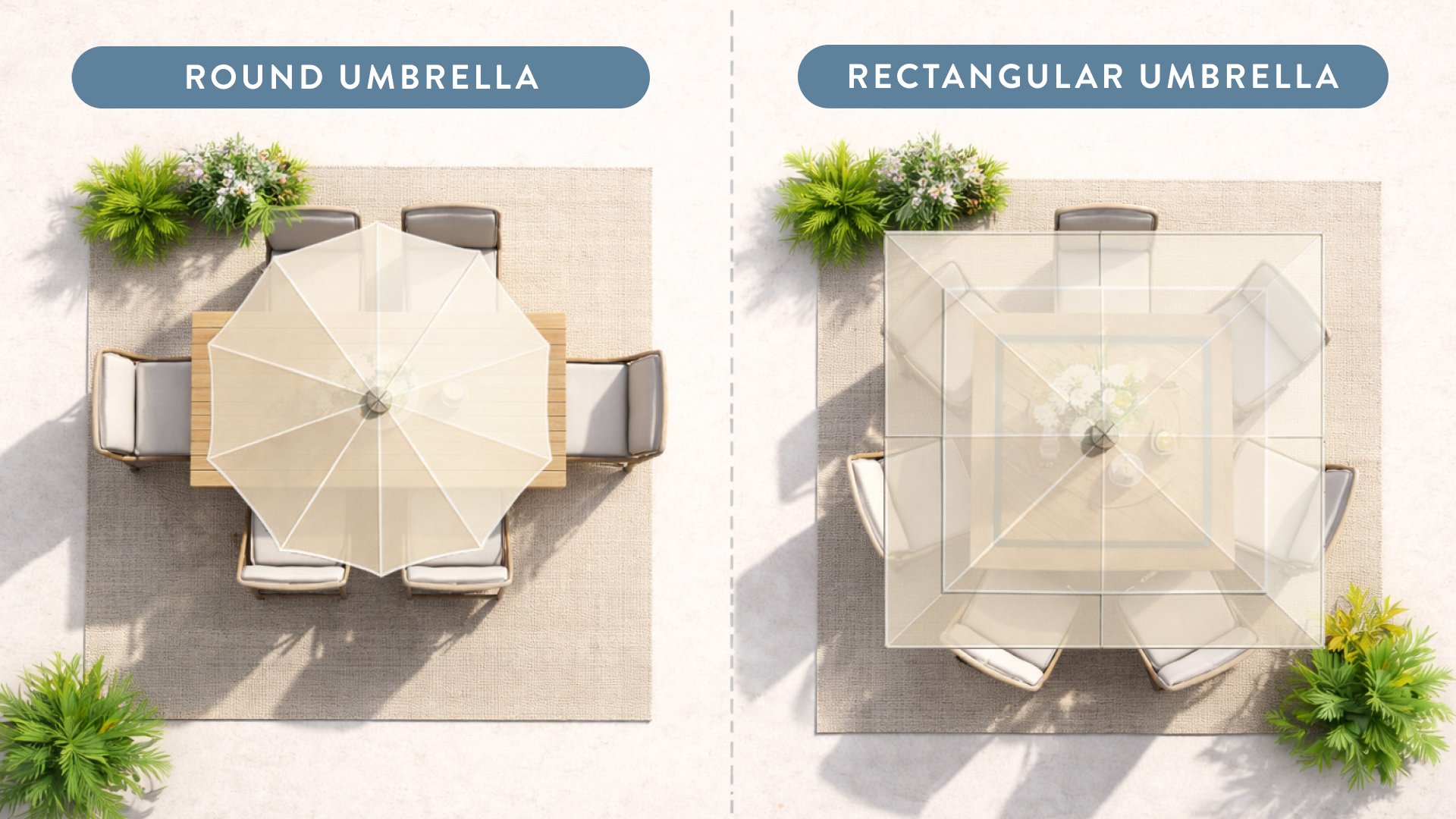
Best for: Circular tables, small patios, and organic layouts.Round umbrellas (often octagonal) are the most common. They naturally shed wind better than flat-sided shapes and soften the look of a patio full of hard concrete and wood lines.
2. Square Umbrellas (Maximum Shade)
Best for: Symmetrical patios, square dining tables, and sectionals.Geometry wins here. A square umbrella provides more surface area (and shade) than a round umbrella of the same width. If you have a modern setup or a square table, this creates a clean, custom look.
3. Rectangular Umbrellas (The Specialist)
Best for: Long dining tables (6+ seats) and oval tables.If you have a table that seats 6, 8, or 10 people, a round umbrella will leave the people at the "heads" of the table exposed to the sun. A rectangle matches the footprint of the table, ensuring everyone eats in the shade.
Quick Shape Picker:
- Bistro Set / Small Round Table: = Round
- Square Table / Lounge Sectional: = Square
- Long Dining Table: = Rectangle
Step 2: Pick Your Size by What You're Shading
Now that you know the shape, let's nail down the specific size.
6ft Umbrellas (The "Bistro" Size)
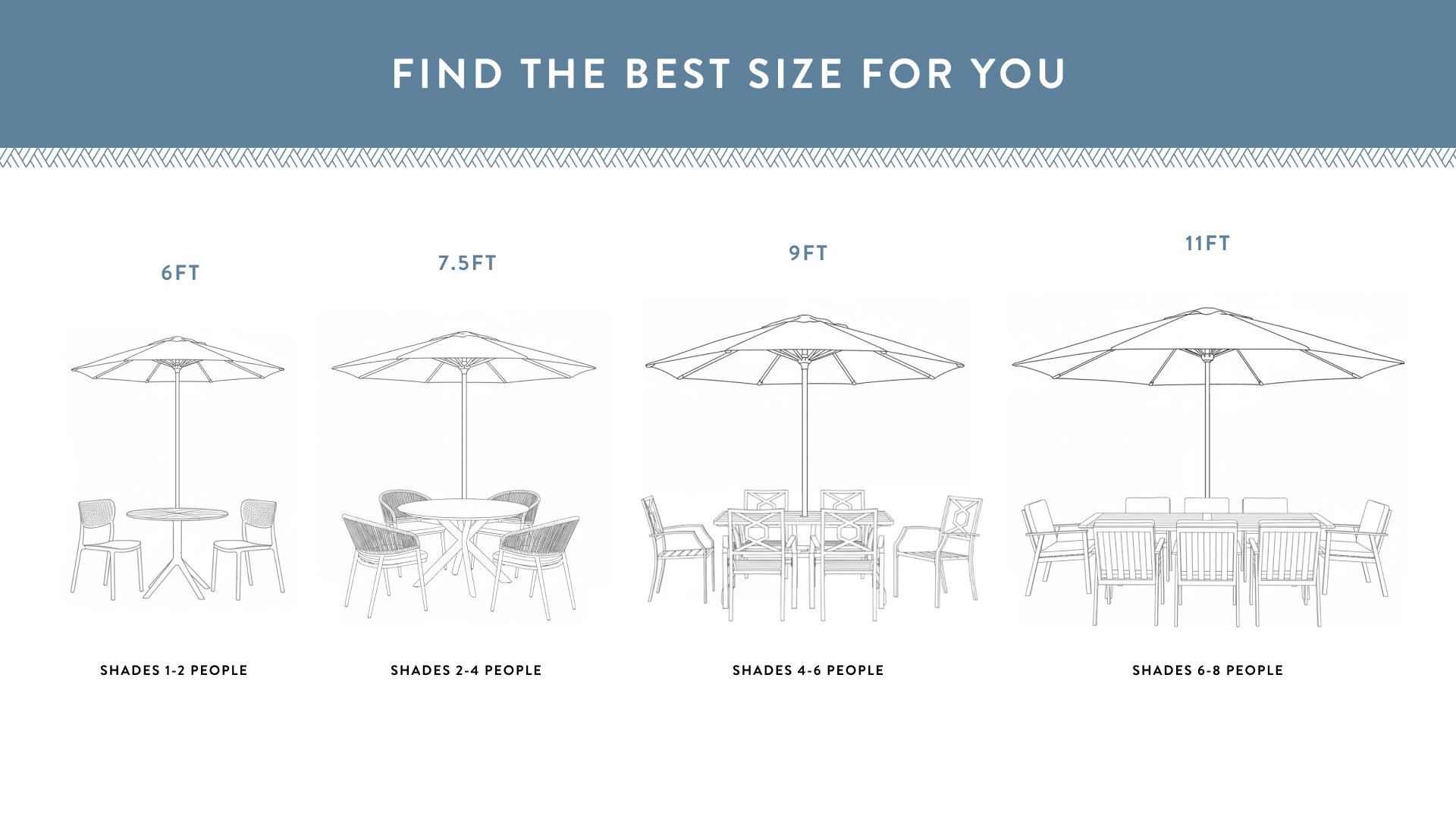
Shades: 1–2 People Best for: Balconies, café tables (30 inches wide), or tight nooks.
- Warning: This is very small. Unless you have a tiny balcony or a specific bistro set, this is likely too small for a standard patio.
7.5ft Umbrellas (The Compact Versatile)
Shades: 2–4 People Best for: Tables up to 48 inches. This is a great entry-level size for intimate dining. If you have a smaller 4-top table or a couple of lounge chairs by the pool, this works perfectly without dominating the skyline.
9ft Umbrellas (The Gold Standard)
Shades: 4–6 People Best for: Tables up to 60 inches or standard round dining tables. If you are unsure, you probably need a 9ft umbrella. This is the most common size for residential patios. It provides enough coverage for a family dinner but is manageable to open and close.
11ft Umbrellas (The "Big Shade")
Shades: 6–8 People Best for: Large dining tables (72–84 inches), large sectionals, or deep seating areas. This is a statement piece. It creates a "room" outdoors.
- Critical Note: At this size, wind is a major factor. You must pair this with a heavy, high-quality base.
The "Size x Shape" Cheat Sheet
Still debating? Find your furniture in the left column and look across to see the recommendation.
Real-World Scenarios (Sun Belt Edition)
Living in a high-heat zone like California or Arizona changes the game. Here is how I’d configure it:
- The Pool Deck: Don't just cover the chair; cover the space. Use a 9ft Square umbrella between two chaise lounges. The square shape lets you butt the edges of the shade together if you buy multiple umbrellas.
- The Outdoor Office: Glare is the enemy. Go for an 11ft umbrella even for a single person. You want to block the sun from peripheral angles so you can see your laptop screen.
- The Dinner Party: If you have a long rectangular table, do not try to force a round umbrella to work. Get a Rectangle umbrella. It looks custom-designed and ensures the potato salad at the far end of the table doesn't spoil in the sun.
Don't Forget the Base (The Hidden Factor)
You can pick the perfect size umbrella, but if you buy a cheap plastic base, it will end up in your neighbor's yard during the first gust of wind.
- Up to 7.5 ft: minimum 50 lb base.
- 9 ft: minimum 60–75 lb base.
- 11 ft: minimum 100 lb+ base (or bolt it down).
Placement Tip: If you are using a table, the table provides some stability. If the umbrella is "free-standing" (over a lounge chair), you need to go even heavier on the base weight.
4 Mistakes That Lead to "Regret Returns"
- Measuring the table, not the chairs: You don't sit on the table. You sit around it. Make sure the shade covers the chairs when they are pulled out.
- Ignoring the "Tilt": A smaller umbrella with a tilt function is often more useful than a giant umbrella that stays flat. The sun moves; your shade should too.
- The "Market" vs. "Cantilever" confusion: Market umbrellas go in the hole in the center of the table. Cantilever umbrellas hang from the side. Don't buy a market umbrella for a sectional couch, the pole will be right in your face.
- Going too small to save space: A 9ft umbrella doesn't take up much more "visual" space than a 7.5ft, but the shade difference is massive. When in doubt, size up one tier.
FAQs
Q: Can I use a round umbrella on a square table? A: Yes! It looks very classic. Just make sure the diameter of the umbrella is 2 feet wider than the diagonal width of your square table.
Q: What if my table doesn't have a hole? A: You need a "Cantilever" (offset) umbrella, or a heavy free-standing base that fits between the table legs (though this can be awkward for legroom).
Q: Do darker colors provide more shade? A: Technically, yes, darker colors absorb more UV, but modern high-quality fabrics (like Sunbrella) protect you regardless of color. Pick the color that matches your vibe, not just for UV stats.
Conclusion
Choosing the right patio umbrella doesn't need to be complicated. If you follow the 2-Foot Rule (adding 2 feet of shade on every side of your table), you will almost always make the right choice.
To recap:
- Round umbrellas for classic/bistro looks.
- Square umbrellas for modern styling and max shade.
- Rectangle umbrellas for long dining tables.
- Base: Always go heavier than you think you need.
Stop guessing and start enjoying your patio without the squinting.